How to fill your weekdays without relying on discounts
Reach the groups who can visit during the week, create an offer that suits them, and make the next booking easier.

Alice Rizzi Franssens
Marketing

Your Saturday slots are filling weeks ahead, but Tuesday afternoon is still wide open. A weekday discount feels like a straightforward way to close the gap. If the people seeing that offer are tied to school or working hours, though, a lower price does nothing to make them available.
A corporate team planning an afternoon outing is making a different decision from a family arranging a birthday party. Filling quieter days starts with understanding who can use those hours and what would make your venue a good choice for them.
Start with the people who can come
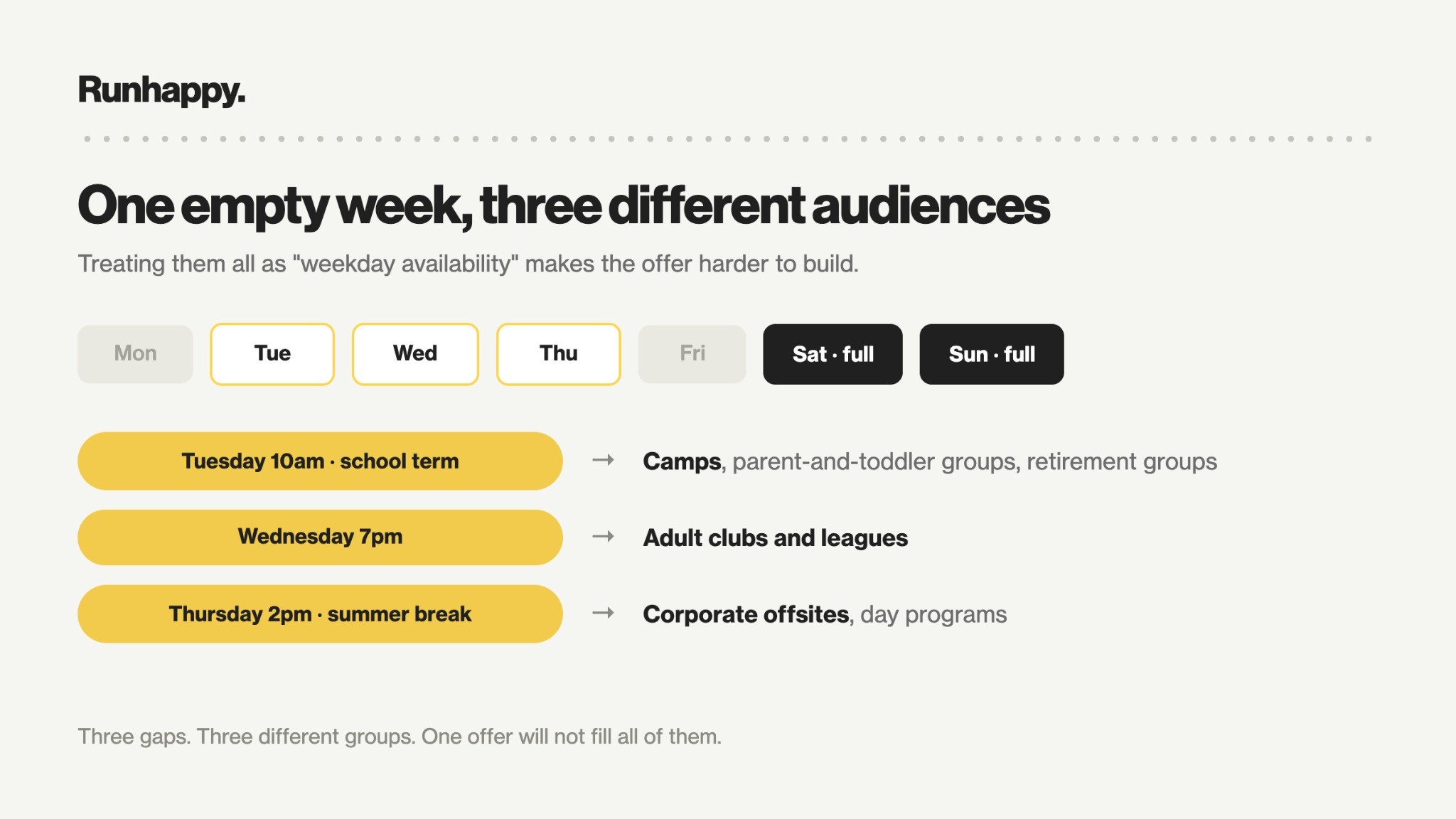
Look at the specific gaps in your calendar. A Tuesday morning during the school term needs a different audience from a Wednesday evening or an afternoon during summer vacation. Treating all three as "weekday availability" makes it harder to build a useful offer.
Depending on your venue, potential audiences might include corporate teams, camps and day programs, homeschool groups, parent-and-toddler groups, or adult clubs. Choose a group whose schedule, interests and requirements fit the hours you want to fill. A camp may need a morning activity during school breaks, while a local business might want an outing that finishes before the working day ends.
Start with your own booking history. Which groups have already visited during quieter periods? What did they book, how did they find you, and what did they ask for? Those conversations give you a starting point for deciding which audience to approach next.
Give them an offer they can recognize
A weekday visitor should be able to see how your venue fits the occasion they are planning. If your website mainly shows birthday parties, an office manager may have to work out for themselves whether you can accommodate a team outing.
Build a page and package around the group you want to attract. Explain the activities, suitable group sizes, event duration, food options and use of the space. Include pricing or enough pricing guidance to help the organizer judge whether it fits their budget, together with a clear way to inquire or book.
For example, imagine an activity venue with spare capacity on Tuesday afternoons. It could develop a two-hour team outing with a group activity, a reserved area and food, with a clear start and finish time. The page would show what is included, which group sizes it suits and what the organizer needs to provide to get a quote.
The venue could then share that offer with previous corporate organizers and approach relevant local businesses. Each message would link to the outing itself, giving the recipient something specific to consider and forward internally. The venue would track which inquiries became bookings and which questions kept coming up, then use those answers to improve the offer.
Review pricing across the whole week
If popular weekend slots consistently sell well ahead of the event date, review whether your prices and minimum spends reflect that demand. Consider booking patterns, conversion and delivery costs together before making a change.
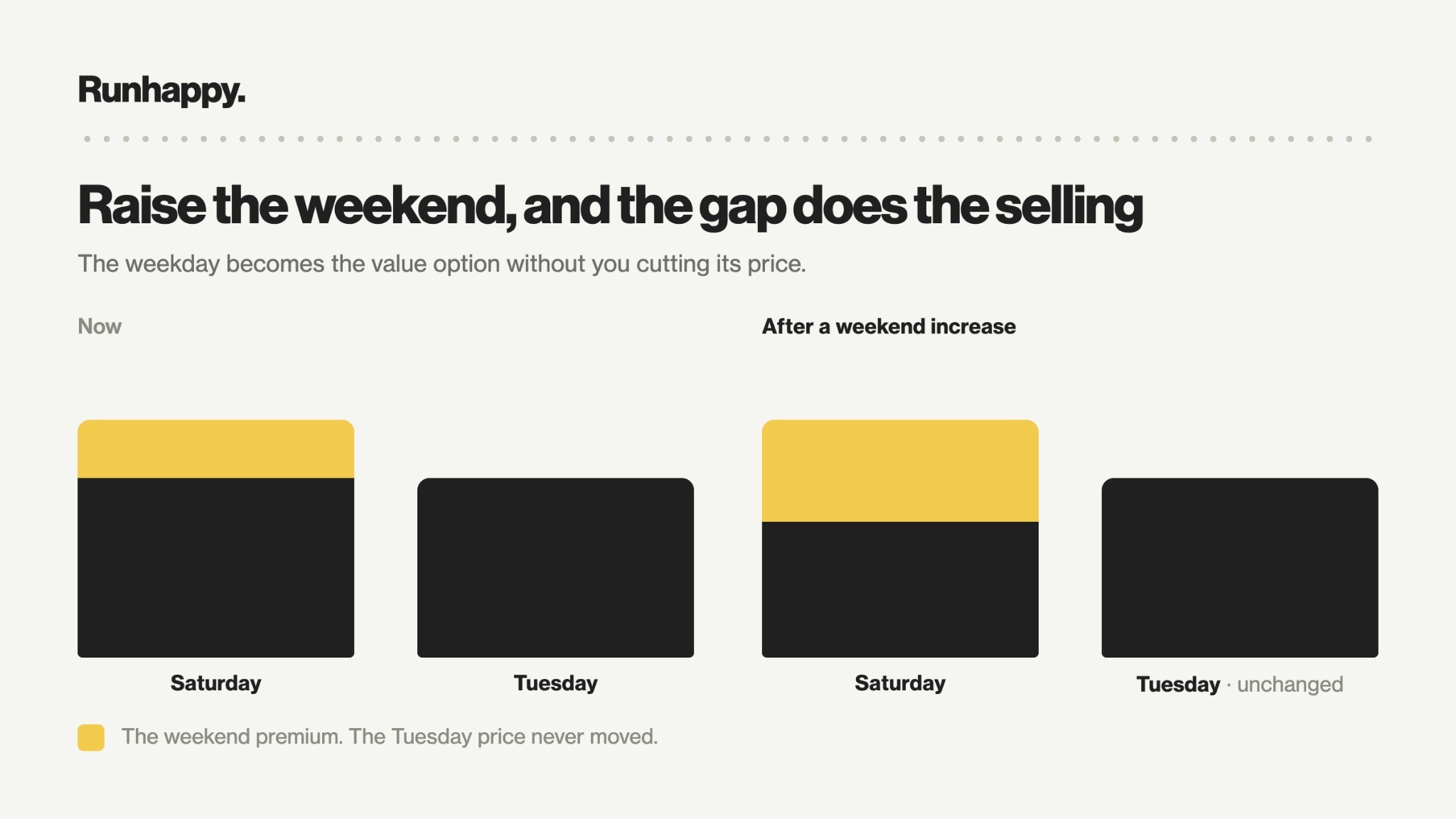
Where weekend demand supports a higher rate, raising it widens the price gap without cutting your weekday price. Customers with flexible schedules have a stronger price incentive to choose the quieter slot. You still need an offer and an audience that fit those hours.
Off-peak pricing earns its place when it brings in additional business at a margin that works for the venue. Compare any extra bookings against delivery costs and the revenue given up on customers who would have booked at the standard rate.
Repeated discounts can also create expectations beyond the dates they were meant to fill. A customer who has seen the same package advertised for less may ask for that rate on a Saturday, particularly when the offer's limits are unclear. If that concession is granted on a slot that would have sold at the standard rate, the venue gives away margin without filling a quiet hour.
Set clear rules for bookings during your busiest periods, too. Minimum spends, booking windows and hold deadlines should be agreed before inquiries arrive and explained consistently. Where unconfirmed requests compete for the same slot, compare expected margin and the time each event needs when deciding what to offer. Your team can then match valuable bookings to prime times and offer flexible groups suitable alternatives, while honoring existing bookings and agreed holds.
Choose extras with a clear cost
Sometimes a useful addition can help an organizer commit. Earlier setup access might make a corporate event easier to arrange. A longer activity session might appeal to a camp with an afternoon to fill.
Choose extras that fit both the customer's needs and your operation. Additional host time, food and longer opening hours all have costs, even on a quiet day. Earlier access is only a simple addition if the space and team are already available.
Before including an extra, decide what it costs to deliver and when it can be offered. That gives your team a consistent offer they can explain, with a reason for the organizer to value it.
Plan for the next visit
Some weekday audiences have a reason to return. Camps plan multiple outings, clubs meet regularly, and companies arrange different events throughout the year. A good first visit gives you an opportunity to discuss what comes next.
Ask the organizer about their schedule and, where there is interest, agree when to get back in touch. A camp planning its next season needs a different follow-up from a company considering a quarterly team outing. Keep a record of the occasion, preferences and timing so the next conversation starts with something useful.
Assess repeat bookings alongside the cost of delivering them and the time they occupy. A recurring group can make future demand easier to plan around, but each booking still needs to work for the venue.
How Runhappy supports your weekday bookings
Working out which weekday offer to build isn't always easy. We're here to help.
First, we start with your data. When you work with us, we handle inquiries across voice, SMS, web and email, and follow up with prospective and past guests. Each of those interactions tells us more about who is reaching out and what they're asking. Together, those inquiries and your booking history form the foundation for putting together your best weekday packages and deciding which groups to target.
Next, once your weekday offer is ready, it needs to be easy to find, straightforward to understand and supported by consistent follow-up. The Modern Venue Booking Playbook walks through those steps, from discovery to rebooking. At Runhappy, we build these booking experiences every day, and we'd love to help you build yours.
If you have weekday capacity you want to fill, talk to our team about how your offer and booking process could work together to bring in more relevant inquiries and turn them into bookings.
Frequently asked questions
Which groups should a venue target for weekday bookings?
Start with the hours you want to fill and the groups your venue can serve well. Corporate teams may suit weekday afternoons, camps may suit school breaks, and clubs or leagues may suit evenings. Your existing weekday bookings can help identify where to start.
Should venues offer weekday discounts?
Use them when price is preventing a worthwhile booking and the customer can visit during the hours you want to fill. Define eligible dates and terms clearly. Check that the offer adds business at a suitable margin, rather than reducing the price for customers who would have booked anyway.
Does raising weekend prices help fill weekdays?
A higher weekend rate gives flexible customers a stronger price reason to choose a weekday, even if the weekday price stays unchanged. Base the increase on demand for your weekend slots. The price difference will not change the schedules of customers who can only visit at weekends.
What non-price incentives help secure off-peak bookings?
Useful extras include earlier setup access or additional activity time, where the venue has the capacity to provide them. Choose an addition that solves a problem for the organizer, calculate its delivery cost and make clear when it is available. Empty space alone does not make an extra free.
Why are recurring weekday bookings valuable?
Confirmed repeat visits give you more visibility over future demand and a basis for planning ahead. You also learn the group's preferences, making the next booking easier to arrange. Their value depends on the margin and time involved, so a recurring booking still needs to make commercial sense.
How do you know whether a weekday offer is working?
Track inquiries, confirmed bookings, revenue after event delivery costs and repeat visits. Where possible, distinguish new business from customers moving an existing booking. The aim is to understand whether the offer is adding worthwhile business and which audience is responding.
Our Blog.


Stay in the Loop
More bookings. Higher upsells. Fewer missed leads. Subscribe to our newsletter for the strategies and stories behind venues running on autopilot with Runhappy.